
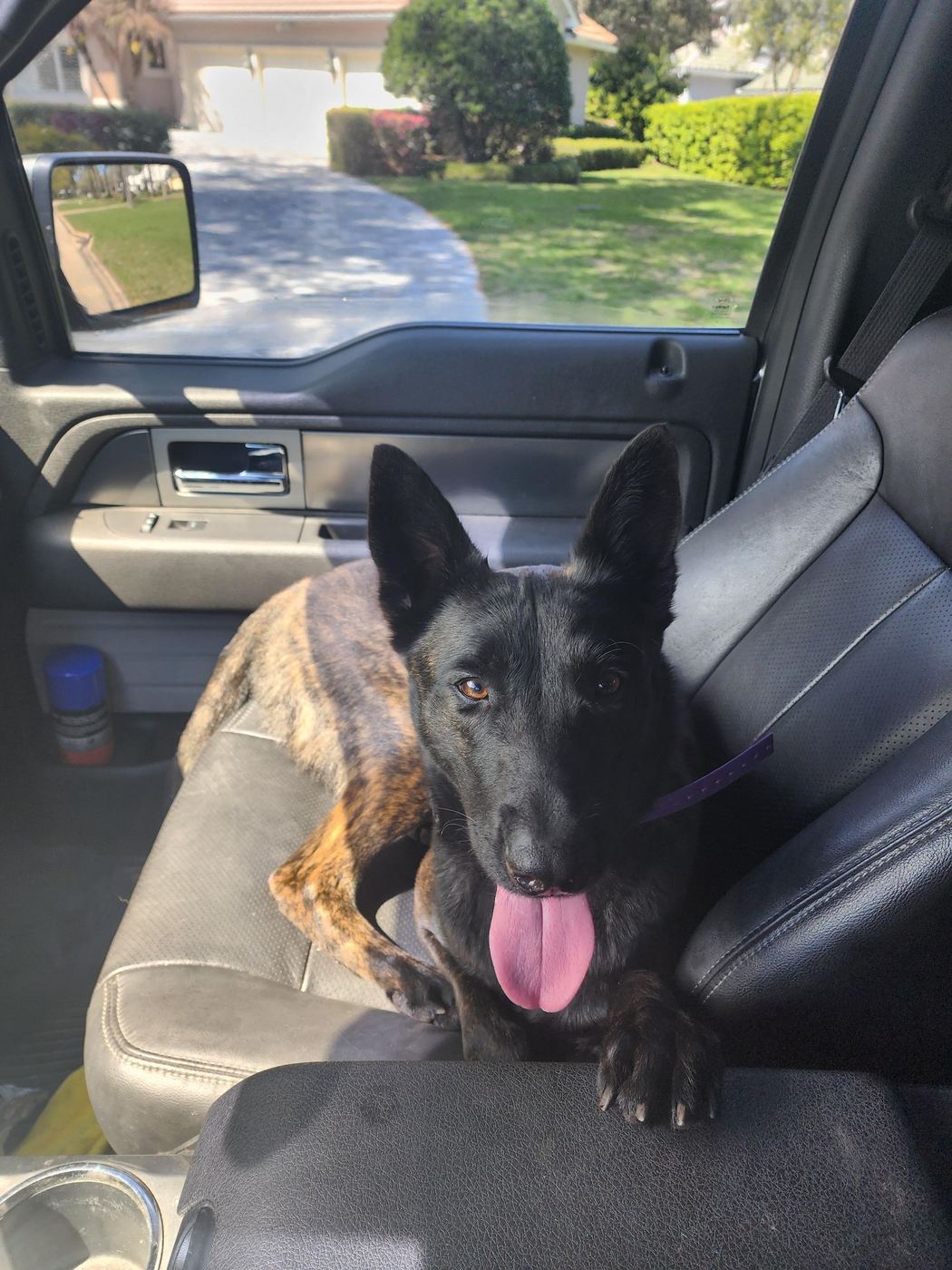
Germany and the Netherlands have built their working dog cultures around testing. Dogs are trained and titled in demanding programs like IGP in Germany and KNPV in the Netherlands, and those results guide which dogs get bred. That's why so many serious working dogs trace back to European lines, and it's where T3's breeding dogs come from.
Most of what I know about training came from people who learned under top trainers in Germany and the Netherlands. It's also where our breeding dogs come from. That isn't about prestige. It's about how those two countries decide which dogs are worth breeding.
What "working line" actually means
Many breeds split into lines bred for different things. Show lines are bred mostly for appearance and movement in the ring. Working lines are bred for what the dog can do: drive, nerve, grip, stability and trainability. Two dogs of the same breed from different lines can be completely different animals to live with and to train.
For a family protection dog, those working traits are the whole point. You want the drive to do the job and the stability to be safe with your kids, and you rarely get both by accident.
Germany: IGP and a culture of testing
In Germany, working dogs are tested in IGP, the sport formerly known as Schutzhund. A dog has to prove itself in three phases: tracking, obedience and protection. The protection phase isn't only about biting. It tests whether the dog can be controlled, whether it releases on command and whether it stays clear headed under pressure.
For German Shepherds in particular, breeding has long been tied to work and evaluation, so a dog's ability shows up in its pedigree, not just its looks.
The Netherlands: KNPV and the Dutch police dog
In the Netherlands, the KNPV, the Royal Dutch Police Dog Association, runs one of the most demanding certification programs in the working dog world. It's built around practical police work, and KNPV lines are known for dogs with serious nerve and a hard, full grip. Many of the Dutch Shepherds and Malinois working in police departments around the world trace back to KNPV lines.
Odin, a Malinois I trained for personal and family protection, came from that world. His mother was brought over from Europe already pregnant, so he was born here but was an import in every way that counts. His sire, Devil, earned a KNPV Phase 1 score of 415, and his grandsire, Big Roy, was a KNPV national champion in 2013.
What T3 imports today
These days we import mostly breeding dogs, and mostly studs. We have an imported KNPV Phase 1 stud that we breed to our females. The females were born here in the US, but they come from imported European lines. Now and then we use a stud from another breeder here in the States, but most of the males we breed with are imported.
Why most families don't import puppies anymore
The rules changed. You used to be able to bring a puppy over at around 10 weeks old. That's how I got Magni, a male Malinois I had from the Netherlands: I picked him up in Houston at 10 weeks old. Since August 2024, dogs coming into the US have to be at least six months old. Because of that, most of our clients aren't importing dogs anymore.
The exception is what we call a green dog: usually a one to two year old that has already shown it's suited for bite work or law enforcement work and just needs the final touches. For a buyer who wants an adult working dog, a green dog can still make sense. For most families, a well bred puppy from European lines, raised here, is the simpler path.
What that means for a family
- Nerve. A stable dog doesn't fall apart at loud noises, strange places or pressure.
- Clarity. A clear headed dog switches on when it matters and settles when it's over.
- Trainability. Dogs bred to work want to work with a handler, which makes training faster and control stronger.
- Soundness. Serious working programs have little room for dogs that can't physically do the job.
That said, not every European working dog belongs in a family home. Some are bred for police work and need a professional handler. Matching the right dog to the right household is the job.
How European training shapes the way I train
I learned through internships with K-9 handlers and trainers, and through a lot of seminars. The trainer I learned the most from spent 18 years in K-9 work. The trainers I learned from share a few habits: clear communication, a lot of structure, using the dog's natural drive to build the work, fair consequences, and testing the dog under real pressure instead of assuming it's ready. That's the backbone of how we train at T3, from puppy foundation all the way to protection.
Buying an imported or green dog? Ask these first
- What titles or certifications do the dog and its parents have?
- Can I see video of the dog working, and of it at rest?
- What health testing has been done?
- Who selected the dog, and what were they looking for?
- What support comes with the dog once it lands, and after?
Questions
What is the difference between IGP and Schutzhund?
IGP is the current name for the sport that used to be called Schutzhund. It tests dogs in tracking, obedience and protection.
What does KNPV stand for?
KNPV is the Royal Dutch Police Dog Association in the Netherlands. Its certification program tests dogs on practical police work and is known as one of the toughest in the world.
Can you still import a puppy from Europe?
Not a young one. Since August 2024, dogs entering the US have to be at least six months old. That's why most buyers now look at puppies from European lines born here, or at green dogs of about one to two years old.
What is a green dog?
A green dog is a young adult, usually one to two years old, that has already shown it's suited for bite work or law enforcement work but isn't finished yet. It needs the final touches from a trainer and handler.
Are European working dogs good family dogs?
The right one can be. Working line dogs need structure, exercise and training. Matched to the right home and trained well, many are loyal, stable family dogs.